


Haines Gallery presents two dynamic exhibitions – Andy Goldsworthy: For Olle and Once The Ocean Floor: Photography By John Chiara, Linda Connor, David Maisel, and Meghann Riepenhoff.
Marking Haines Gallery’s 12th solo exhibition with celebrated artist Andy Goldsworthy, For Olle is dedicated to Goldsworthy’s longtime friend and collaborator, Olle Lundberg, whose recent passing informs the exhibition. Bringing together a suite of related photographic works and a clay sculpture created for this presentation, the show offers an intimate reflection on materiality and memory, loss and renewal.
Goldsworthy has built an unparalleled reputation for his sculptures, installations, photographs, and films that explore our relationship to the natural world. His ephemeral works, a fundamental part of his practice since the late 1970s, are created outdoors using the materials and conditions of the site, such as earth, rocks, flowers, and leaves; these works often last only a short time before they are altered or erased by natural processes. Made almost daily, their beauty and meaning are bound up with the forces that they embody: labor, temporality, impermanence, and cycles of growth, decay, and regeneration.
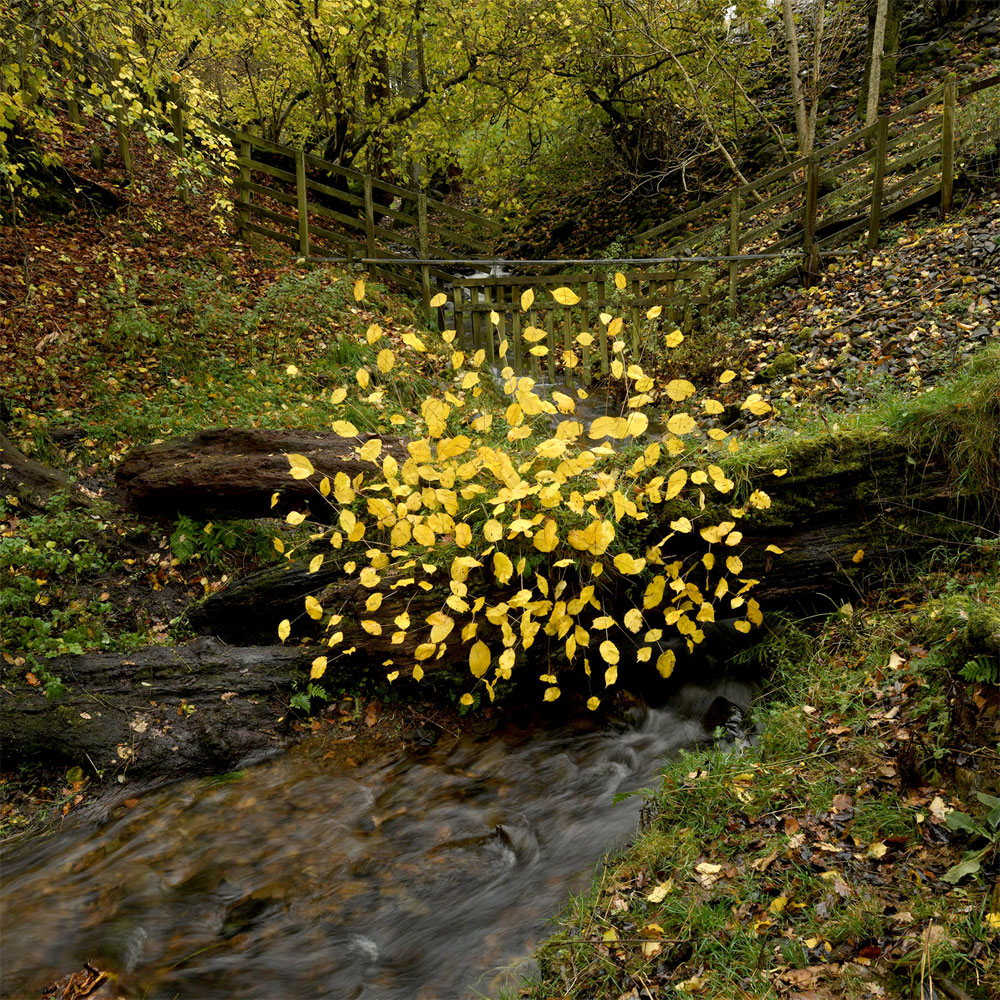
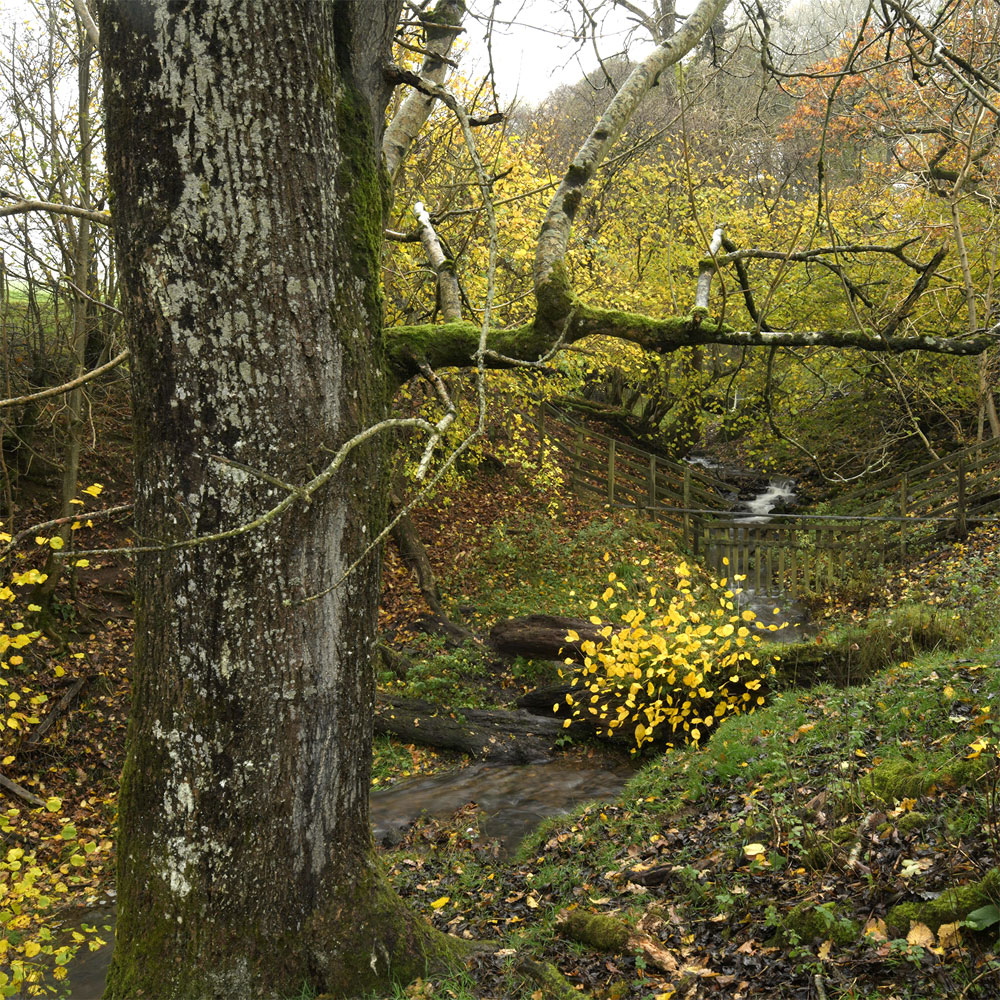
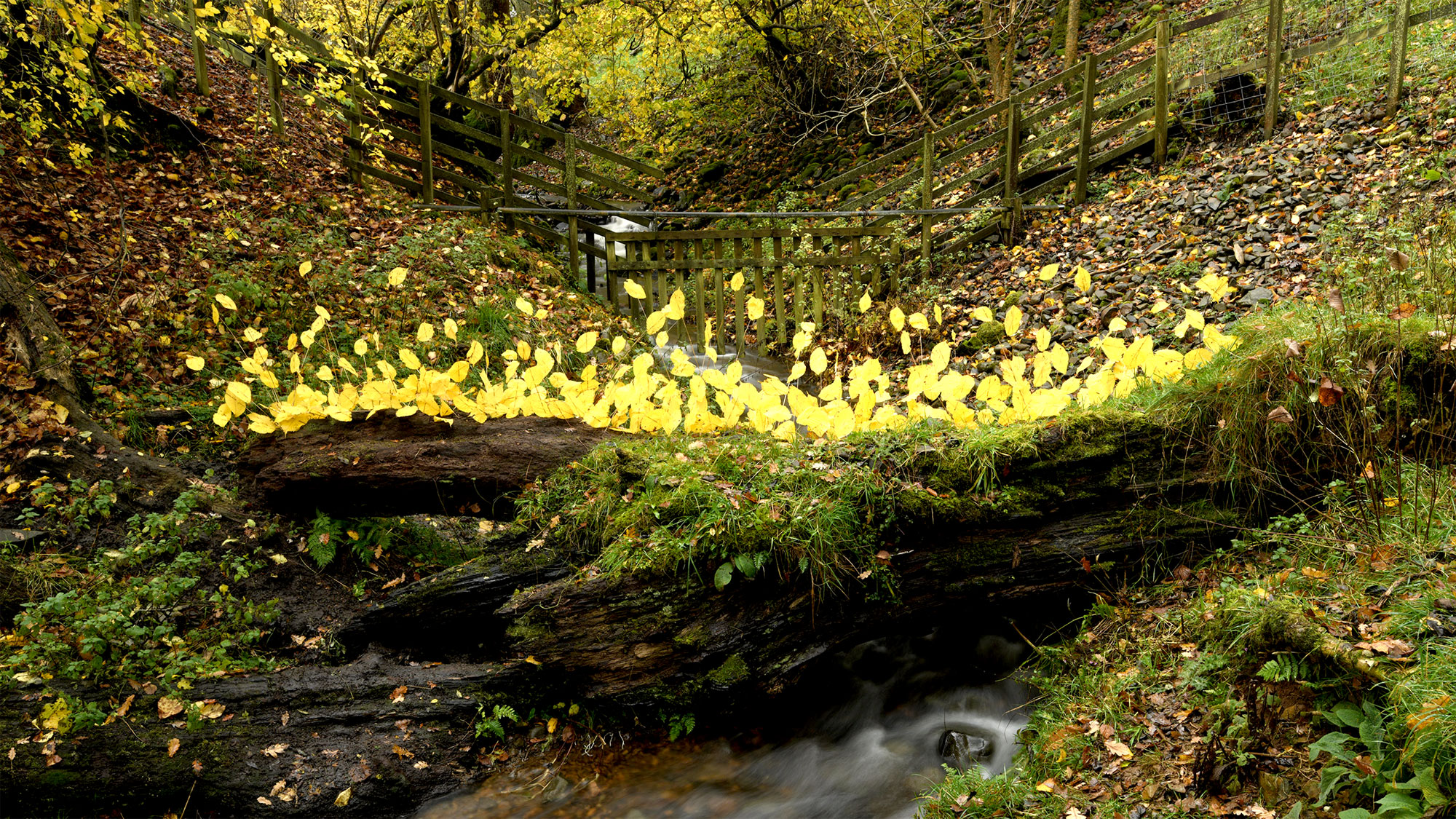
At the heart of the exhibition are three photographic diptychs from Goldsworthy’s series “Fallen Elm” (2009–present), documenting ephemeral works made in relation to a single, fallen elm tree near the artist’s home in Scotland. On view for the first time, the “Fallen Elm” works in For Olle were made in November 2025, in the days following the loss of San Francisco architect Olle Lundberg. Each pair of images features delicate yellowed elm leaves and grass stalks that Goldsworthy has arranged along the trunk of the fallen elm in various constellations: a line, screen, or starburst.
Working across a range of photographic processes in Once The Ocean Floor, four artists foreground the natural world not simply as subject, but as an active force – an agent, collaborator, and historian.
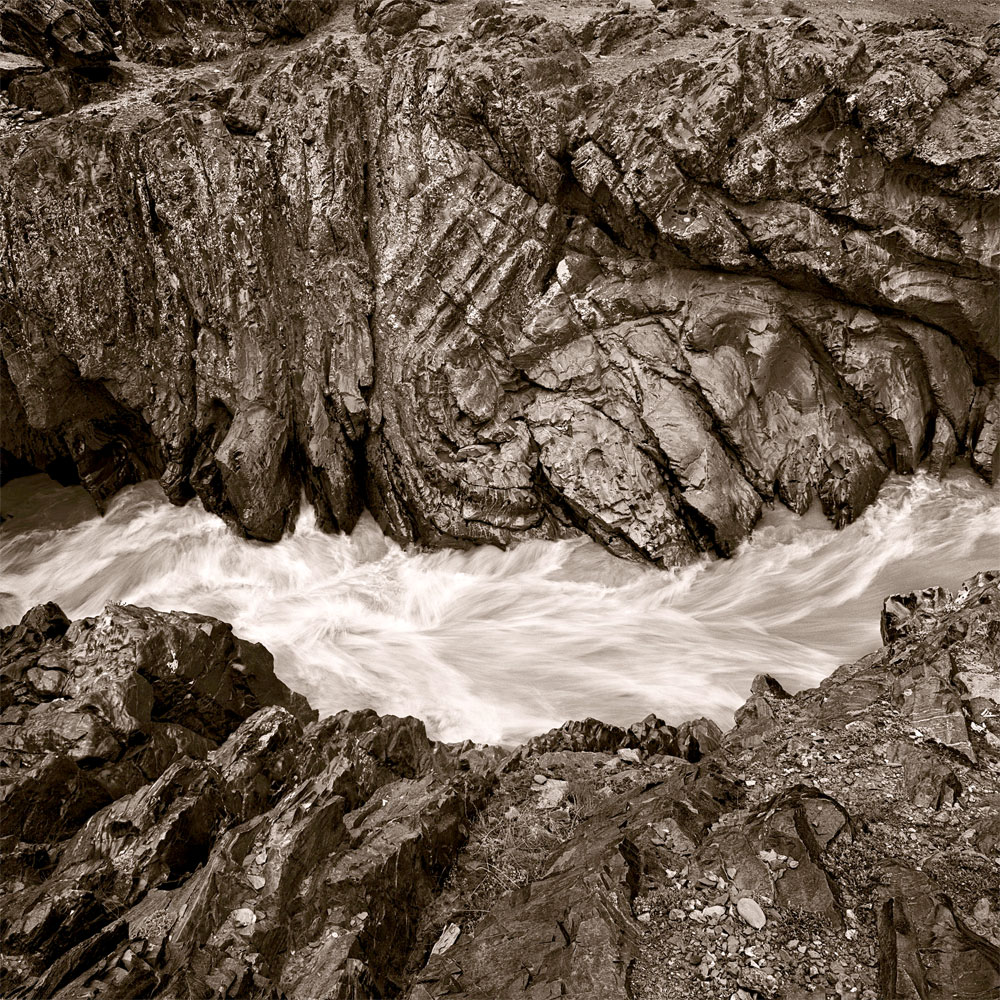
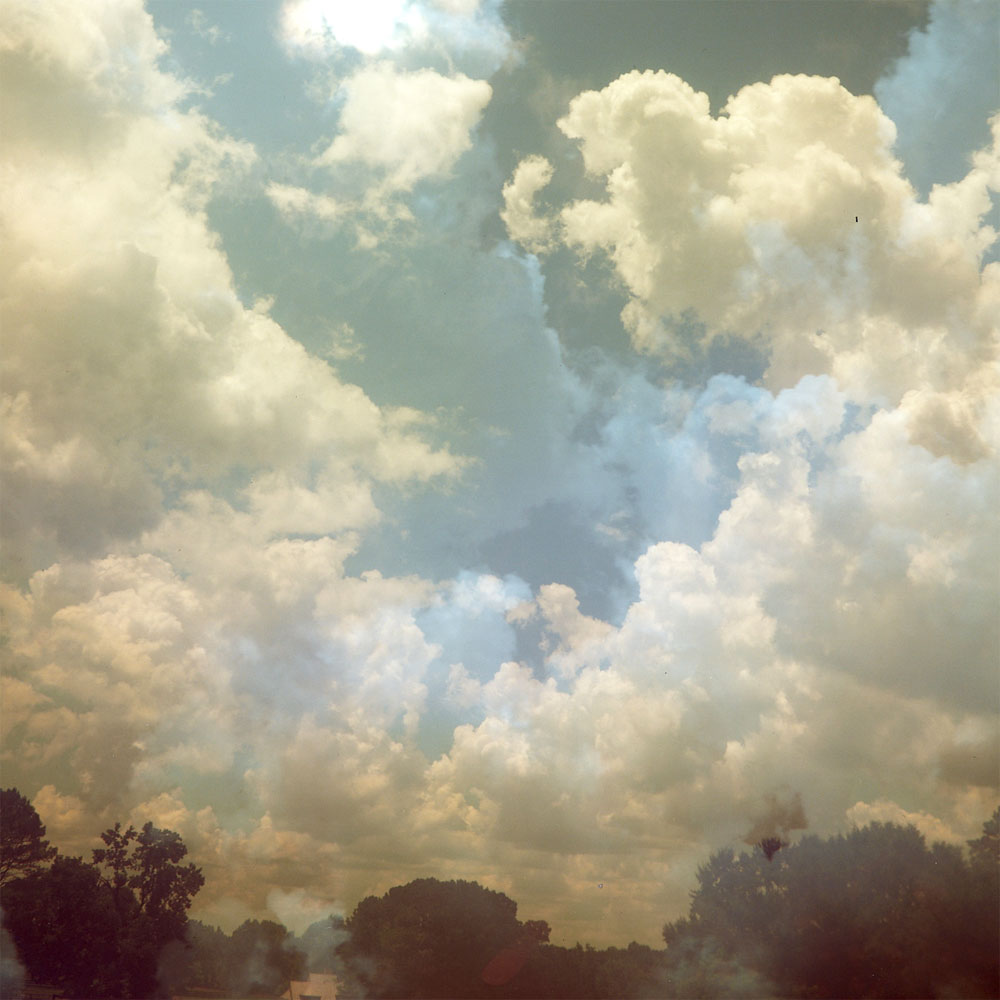
Once the Ocean Floor includes a suite of new prints made during John Chiara’s 2025 artist residency in Georgia, capturing wooded meadows and drifting clouds, including a mysterious, shaded thicket of trees and two meditative 10-inch by eight-inch works that find quiet beauty in nature. Linda Connor’s eponymous series depicting the exquisitely craggy rock faces of Ladakh, India – Himalayan terrain that lay submerged beneath an ancient ocean more than 100 million years ago – and related works reflect a long-term engagement with the elemental forces of spirit and nature that continuously reshape our world.
David Maisel’s “Spiraling” series offers an aerial perspective on the environmental crisis rapidly unfolding across Utah’s Great Salt Lake region. Through his lens, endangered landscapes are imbued with a disquieting allure. Created directly within the landscape, Meghann Riepenhoff’s “State Shift” cyanotypes underscore nature’s force as an agent of transformation, while inviting viewers to consider the personal and collective shifts needed to preserve their shared home.
Together, the artists in this exhibition propose a re-orientation of photographic practice – one in which authorship is shared with and inspired by the natural world. Across these works, the earth is not merely represented, but an active participant. In this sense, photography becomes less a tool of depiction than a site of encounter, where the forces of nature, human intervention, and material processes converge.
Andy Goldsworthy (b. 1956, Chesire, UK; lives and works in Dumfriesshire, Scotland)
Goldsworthy’s works have been exhibited in major sites and museums internationally, including solo exhibitions at the Metropolitan Museum of Art, New York; Museo Nacional Centro de Arte Reina Sofía, Madrid, Spain; Royal Scottish Academy, Edinburgh, Scotland; and Yorkshire Sculpture Park, UK; and permanent works at the deCordova Sculpture Park and Museum, Lincoln, MA; de Young Museum, San Francisco; Presidio of San Francisco; National Gallery of Art, Washington, DC; Nelson-Atkins Museum of Art, Bar Kansas City, MO; Stanford University, CA; and Storm King Art Center, Mountainville, NY. He has been the subject of several substantial monographic publications, as well as two feature-length documentaries: Rivers and Tides (2002) and Leaning into the Wind (2017).
John Chiara’s (b. 1971, lives and works in San Francisco) luminous Ilfochrome prints, made using hand-built camera obscuras, are both a window onto the world and a physical object shaped by time, light, and touch. Printed directly onto photographic paper using hand-built camera obscuras, his images possess an uncanny clarity – at once dreamlike and sharply lucid. Through layered exposures and subtle filtration, Chiara produces richly saturated, atmospheric scenes that openly register the conditions of their making. Light leaks, chemical drips, tape marks, and other material traces refuse the illusion of a seamless image.
Linda Connor’s (b. 1944, lives and works in the San Francisco Bay Area) photographs offer a foundational perspective within the exhibition, lending the show its title.
Linda Connor (continued). A beacon within the photo community, Connor’s longtime role as an educator, mentor, and advocate for young photographers has been deeply influential throughout the Bay Area and beyond.
David Maisel’s (b. 1961, lives and works in the San Francisco Bay Area) “Spiraling” series offers an aerial perspective on the ecological crisis affecting the Great Salt Lake region. Gravely impacted by climate change and reshaped by mining toxins and agricultural runoff, the lake’s size has decreased by more than two-thirds since Maisel began working there nearly 40 years ago. Evaporation ponds and mineral extraction sites become nearly unrecognizable abstractions that pulse with otherworldly colors and geometries. In the two prints on view – and throughout much of his work – Maisel uses beauty “as a tool, a device for helping viewers focus their attention,” creating space for them to contemplate what might otherwise be unthinkable.
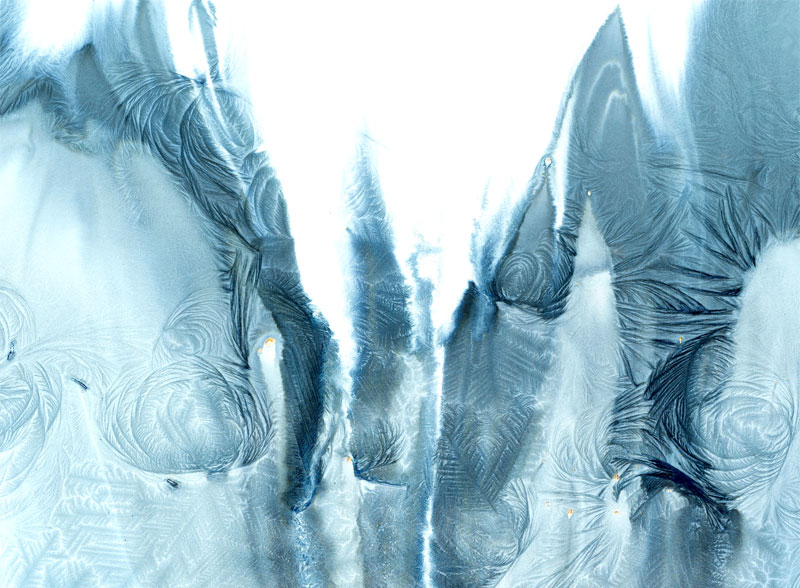
Meghann Riepenhoff (b. 1979, lives and works in Bainbridge Island, WA) creates her cyanotypes directly within the landscape, letting the elements leave physical inscriptions on paper coated with light-sensitive materials. Prominently featured in the exhibition, works from Riepenhoff’s recent “State Shift” series introduce new materials and gestures, borrowing its title from a scientific term for sudden, dramatic changes that occur when ecosystems cross critical thresholds. In the diptych on view, freezing water forms crystalline passages that sweep across the paper. “The physical nature of my work, where photography-based media come in contact with rain, waves, wind, and wintry environments, is a call to be in closer contact with our environment,” Riepenhoff has said.
May 8 through July 3, 2026
Tuesday through Saturday, 10:30 a.m. to 5:30 p.m.
Opening Reception: Friday, May 8, 2026, 5:00 p.m. to 7:00 p.m.
Haines Gallery, Building C, First Floor, Fort Mason Center for Arts & Culture, 2 Marina Boulevard, San Francisco
FREE
Haines Gallery:
HainesGallery.com
(415) 397-8114
art@HainesGallery.com
Andy Goldsworthy:
AndyGoldsworthyStudio.com
John Chiara:
JohnChiara.com
Linda Connor:
HainesGallery.com
David Maisel:
DavidMaisel.com
studio@DavidMaisel.com
Meghann Riepenhoff:
MeghannRiepenhoff.com
MeghannRiepenhoffAssistant@gmail.com
Sign up today for the latest news from Fort Mason Center For Arts & Culture.

