

September 17, 2026 – December 31, 2027
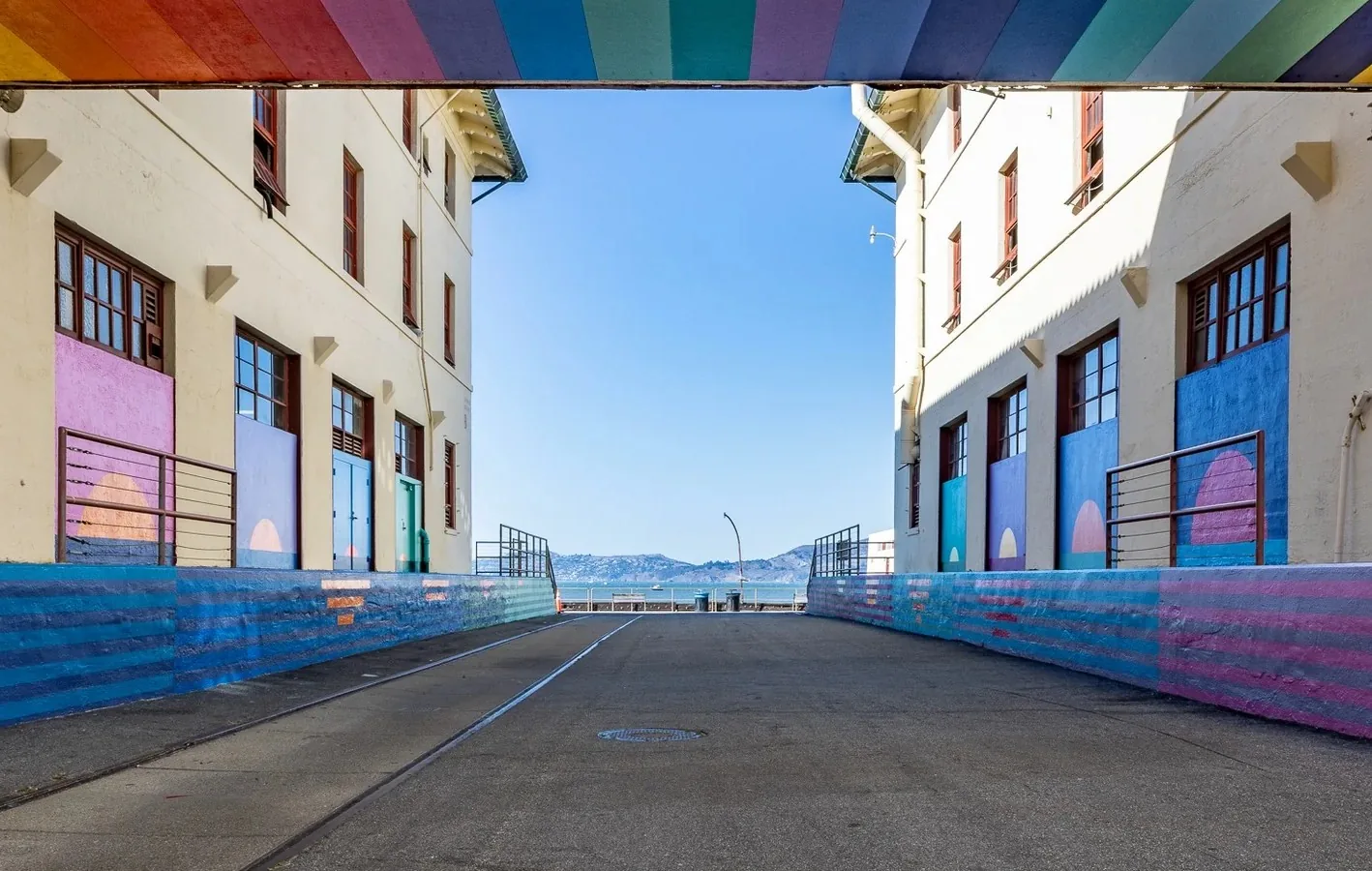
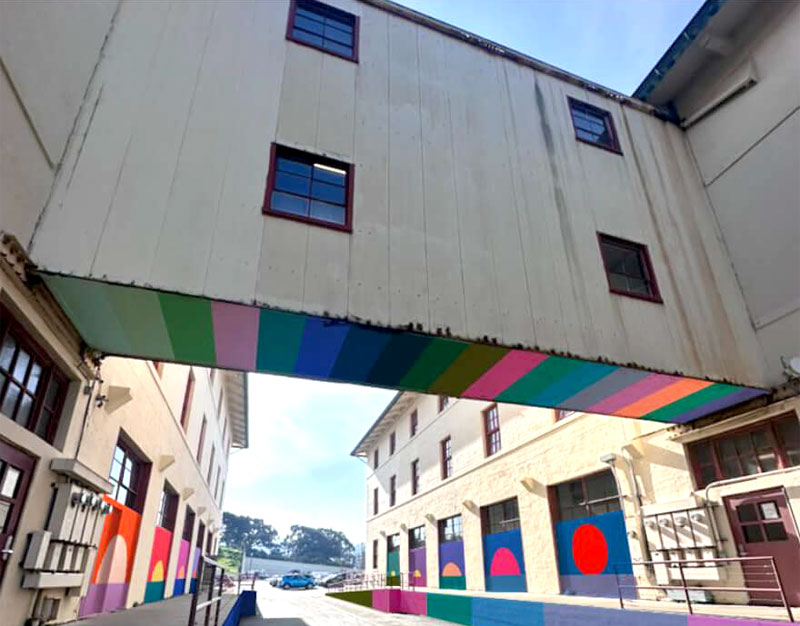
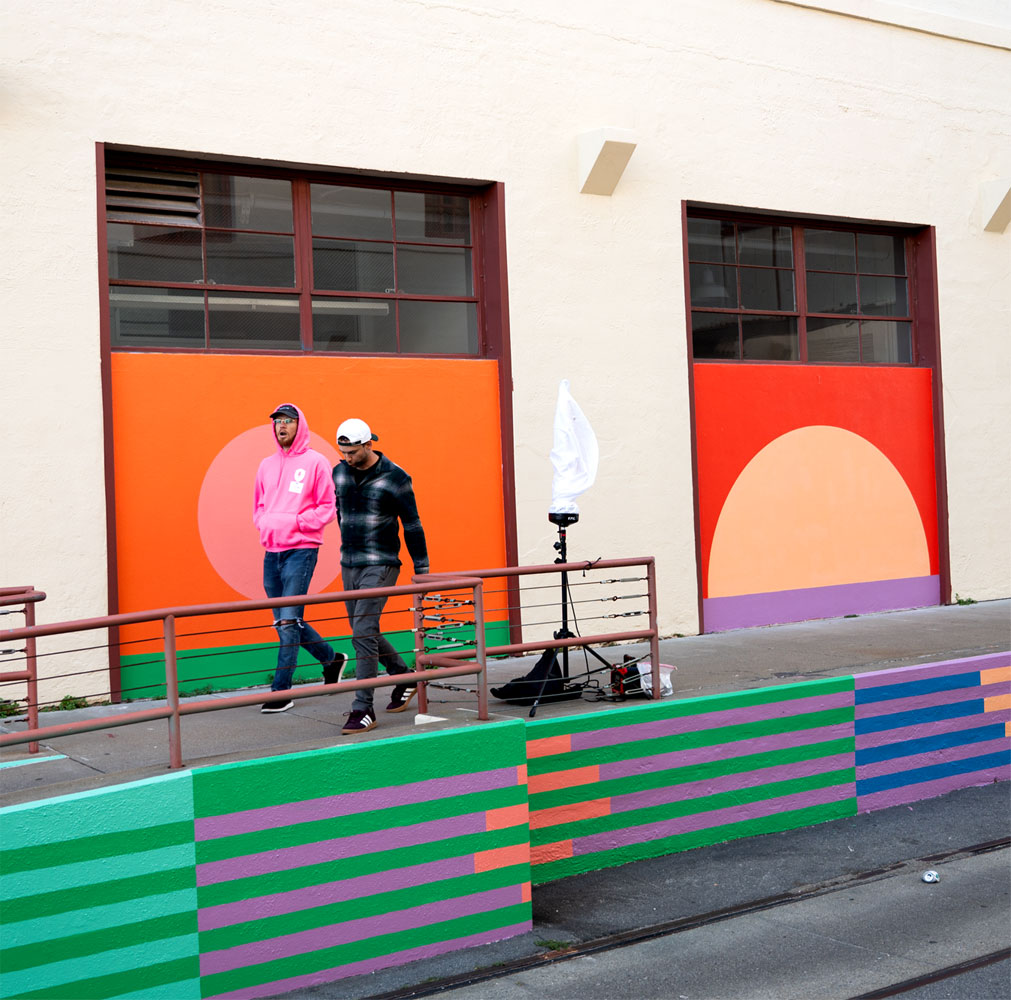
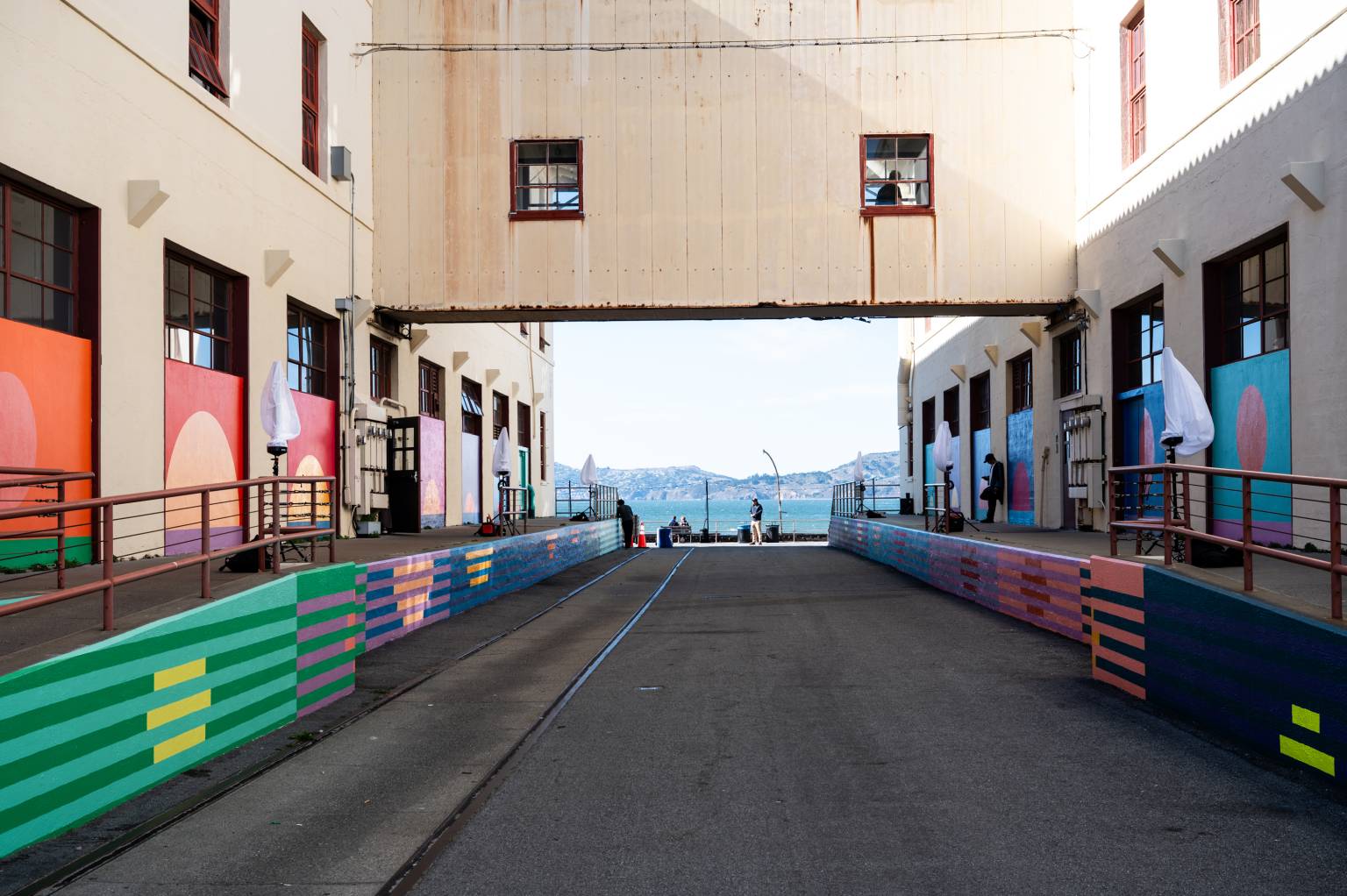
For The Sea Is But Another Sky, a painting commission for the passageway between Landmark Buildings B and C, Leah Rosenberg highlights the fundamentals of Fort Mason Center For Arts & Culture’s site: the setting sun, the rising moon, the Bay Waters, and the wind that dapples across their interaction.
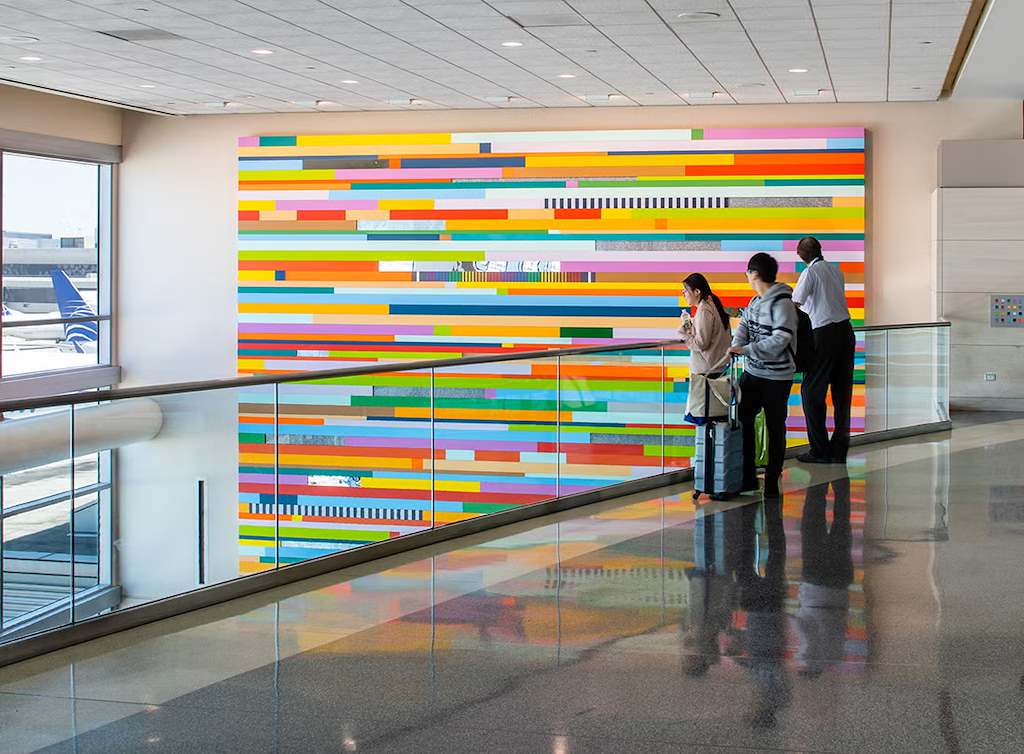
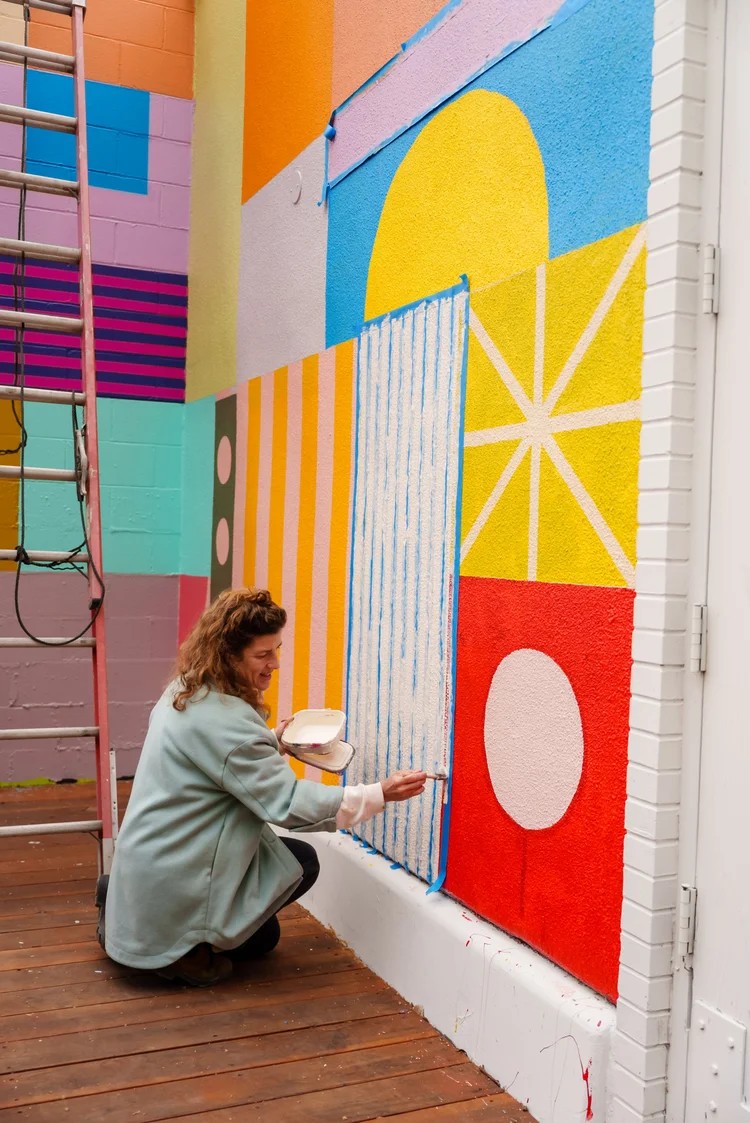
As an artist who studies the color in everyday life, Rosenberg remakes buildings and public spaces with exuberant visions of local conditions. She often draws on the changing palette of a surrounding landscape, from grasses and flowers to sea and skies. SFMOMA, the San Francisco International Airport (SFO), and the San Luis Obispo Museum of Art, among others, have invited her to transform their commons via her extraordinary palette.
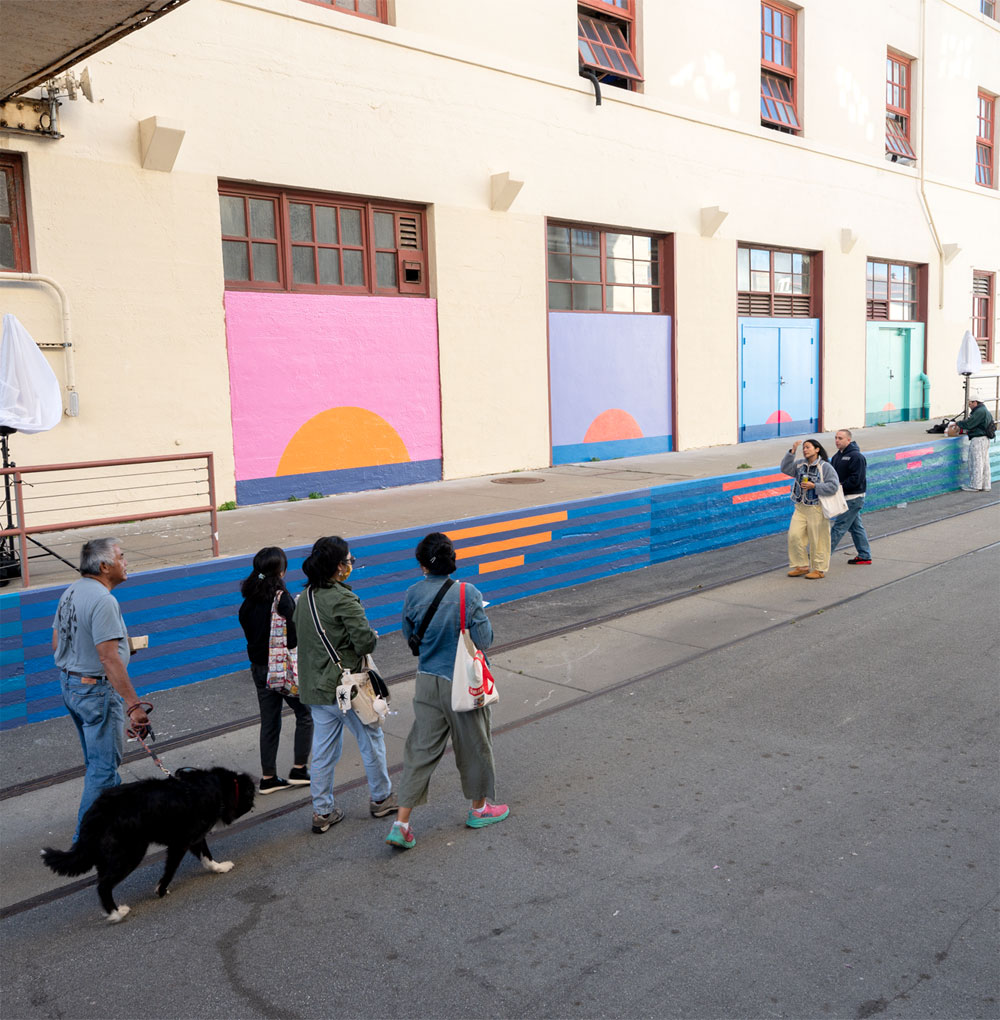
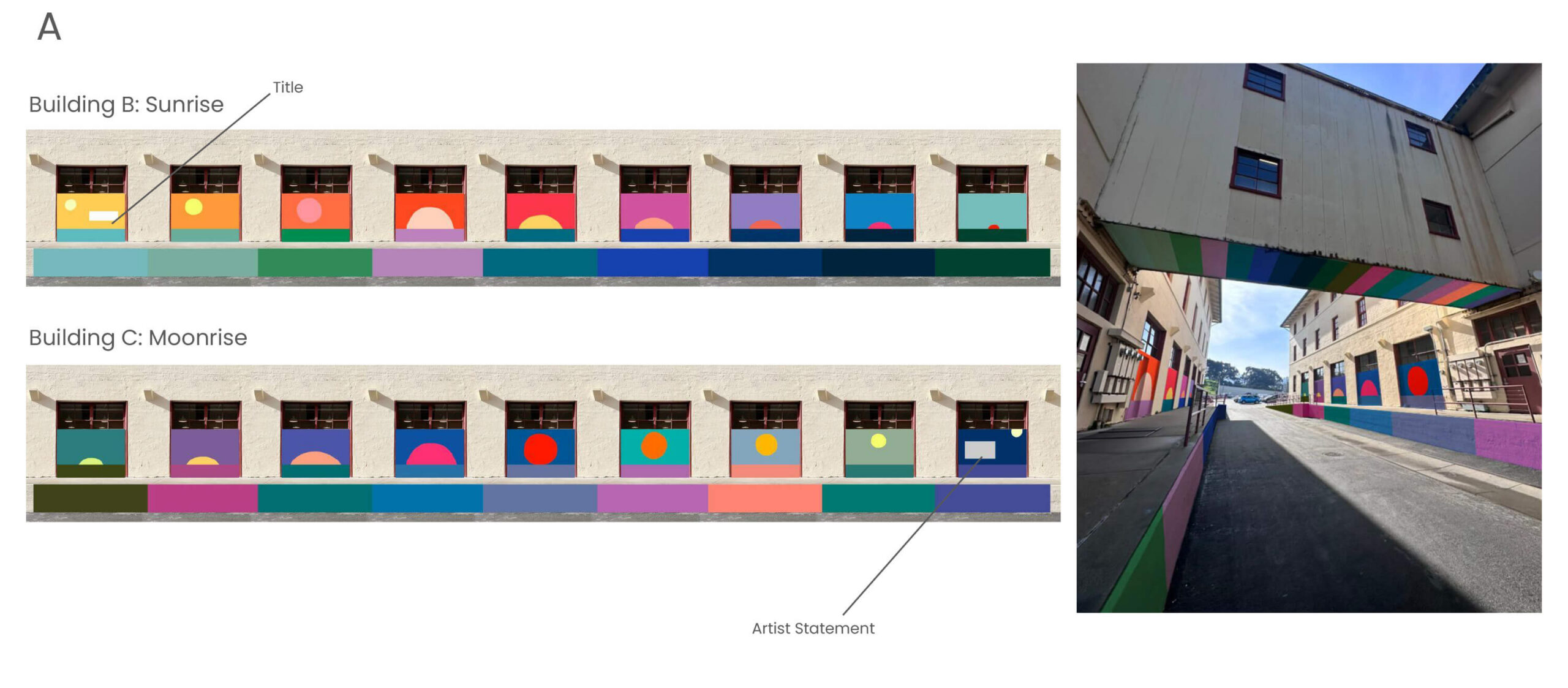
On the cusp of Fort Mason Center For Arts & Culture’s 50th anniversary as a nonprofit home for arts and culture, Rosenberg folds the campus’ natural environment onto its former military buildings – buildings designed to send people and material half a world away. In her “mural alley” project, however, Rosenberg stays close: the edge of the San Francisco Bay spills out and onto 18 loading docks, here remade into discrete painting blocks.
The waters ripple across continuous walls beneath pedestrian walkways, and the interplay of both pulls you forward into the site itself.
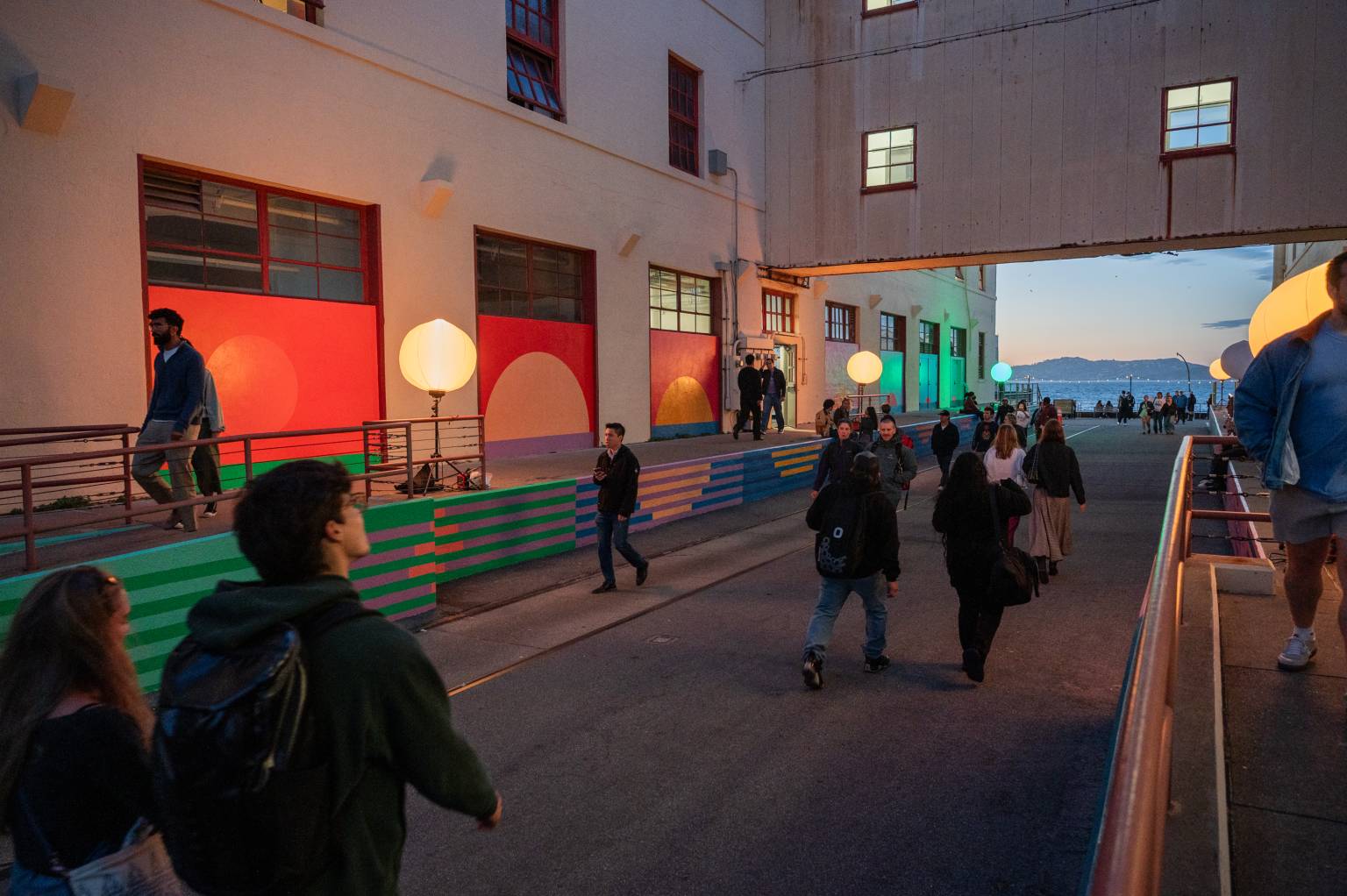
In making The Sea Is But Another Sky, Rosenberg invites viewers to see themselves as agents and actors in this landscape. She imagines each loading dock as “another frame. As you walk, the paintings unfold almost cinematically: sunrise becomes sunset, sun becomes moon, sky becomes sea. The body edits the film simply by moving through it.”
In this way, she recalls Fort Mason Center’s call to its first audiences, in 1977: “You are invited to attend, to participate, to propose your own ideas – to become involved in making these solid old army buildings come alive with all the vitality and diversity of the San Francisco Bay Area.” Within The Sea Is But Another Sky, that vitality above, around, and all about Fort Mason Center always includes You.
Leah Rosenberg plumbs color, memory, and place in paintings, sculpture, installation, and performance. Her work has been commissioned by The Contemporary Jewish Museum in San Francisco; The San Francisco Arts Commission for SFO; and the San Francisco Museum of Modern Art, where she led the pastry program for Blue Bottle Coffee’s Modern Art Desserts. A native of Saskatoon (Canada), she completed her MFA at the California College of Art; her thesis explored the artistic possibilities of cake.
ARTIST STATEMENT
Fort Mason has a way of rewarding those who keep going. Past the galleries and cafés, beyond where most visitors turn around, there is a point where the fishermen gather, the seals lift their heads from the water, the wind picks up, and the horizon opens wide. Standing here, I find myself thinking about orientation, time, the history of this place, and what else is out there.
I have been working in the Public Art Corridor, an outdoor space between Buildings B and C. When looking at Building B, you are facing the setting sun; the other way, the rising moon. Walking between them, you move between day and night, east and west. I kept thinking about how far back the history of this landscape reaches and how the Bay has always been shaped by changing light, tides, weather, animals, ships, people coming, people going. Long before these buildings existed, the sun and moon were already tracing these same paths overhead.
I have always been drawn to sequences; to repetition, seriality, and the possibility of making paintings move. The 18 loading bays offered an architecture that already contained rhythm. Each opening became another frame.
As you walk, the paintings unfold almost cinematically: sunrise becomes sunset, sun becomes moon, sky becomes sea. The body edits the film simply by moving through it.
Some of the colors may seem a little fantastical for sky and sea, sun and moon. Yet every one can be found nearby: in the flora, the art in galleries, the food, the buoys, the cargo ships, the sailboats, and the atmosphere itself. The landscape is already painting these colors. The murals simply gather them together.
Then again, the murals are only half the picture. Throughout the day the sun casts moving shadows across the walls, redrawing the compositions hour by hour. The buildings are in conversation with the sky.
And then there is the wind. During installation, gusts lifted paint from our buckets, carried color across the drop cloths, as if laughing at our attempts to paint perfectly straight edges. Over time, it felt as though everything here had become a character: the seagulls, the fog horns, the fishermen, the seals, the conversations drifting between the buildings, a paper bag tumbling down the corridor, the changing tide, the afternoon light.
Every passage through the corridor is different. The painted colors remain the same, but the light never does. Morning and evening, fog and clear skies, each produces another version of the work.
As Fort Mason Center For Arts & Culture celebrates 50 years as a nonprofit partner of the National Park Service, I hope these murals celebrate not only the site but its continual becoming … its bright moments and dark ones, its calm mornings and windy afternoons, its long history and the countless people who continue to shape it.
“A Massive New Mural at Fort Mason Brings Otherworldly Colors to the Water’s Edge: Leah Rosenberg’s ‘The Sea Is But Another Sky’ is part of the multifaceted programming at the free Fort Mason art walk on Sept. 17” by Nastia Voynovskaya (September 11, 2026)
September 17, 2026 through 2027
Opening Reception: Thursday, September 17, 5:00 p.m. to 7:00 p.m. (part of the Fort Mason Art Walk)
Daily, 7:00 a.m. to 12:00 a.m.
FREE
Leah Rosenberg:
LeahRosenberg.com
studio@LeahRosenberg.com
Corridor between Buildings B and C, Fort Mason Center for Arts & Culture, 2 Marina Boulevard, San Francisco
Sign up today for the latest news from Fort Mason Center For Arts & Culture.

