
Steeped in the military and the arts, Fort Mason Center for Arts & Culture’s unparalleled history extends back to the 1700s. In the 20th century, this National Historic Landmark District served as a critical embarkation point for millions of U.S. Army troops headed to war in the Pacific — before being reimagined as a vibrant cultural hub and urban national park in the 1970s.
Fort Mason Night Market – FMCAC and its partners, West Coast Craft, Off the Grid, and Stern Grove Festival launched this curated craft, culinary, and cultural-focused event.
Stern Grove Festival – The nation’s oldest free music festival relocated its offices to FMCAC and began curating live music for the Fort Mason Night Market in August 2025.


Arion Press – The nation’s last fully integrated fine book publishers relocates its press to campus. The press, celebrating its 50th anniversary, relocated 49 tons of equipment, including a historic 19th-century type foundry, letterpress machinery, and a bookbindery, to a new 10,000-square-foot glass-front facility designed by Jensen Architects.
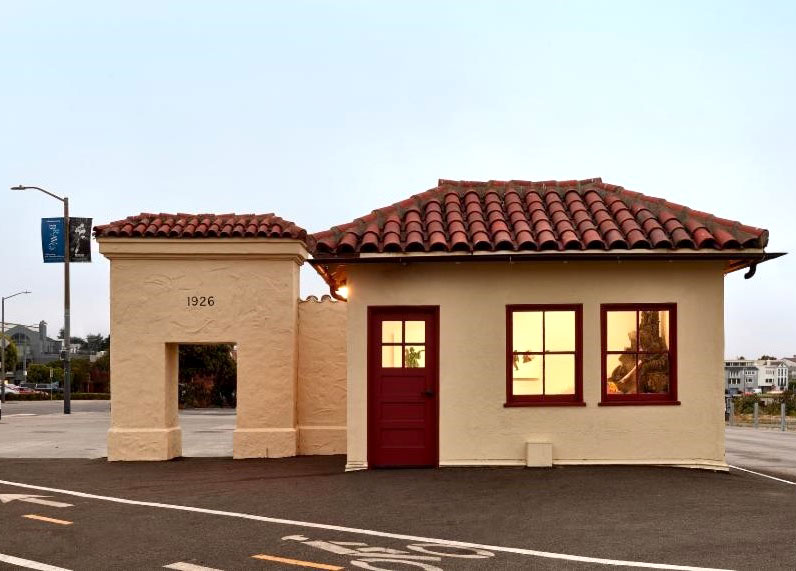
FMCAC and FOR-SITE launch the Guardhouse Program. Rotating artist installations takeover the historic entrance of campus. Artists presented to date include Kija Lucas, Judith Selby Lang & Richard Lang, Tanja Geis, Lexa Walsh, and Umar Rashid.
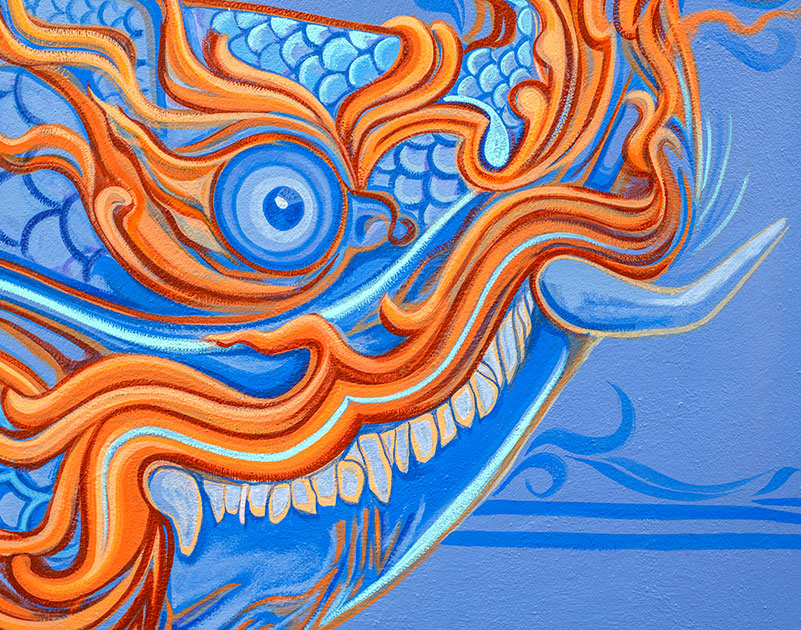
Thitiwat Phromratanapongse: Wat Walls – Fort Mason Art and FMCAC debut the Public Art Corridor with an installation by artist Thitiwat Phromratanapongse. The large-scale work paid homage to Thai temple walls, transforming the corridor between Buildings B and C with wave-like forms, birds in flight, and spiritual figures. Fort Mason Art has subsequently commissioned works by Oscar Lopez and Cristo Orepeza to activate the space.
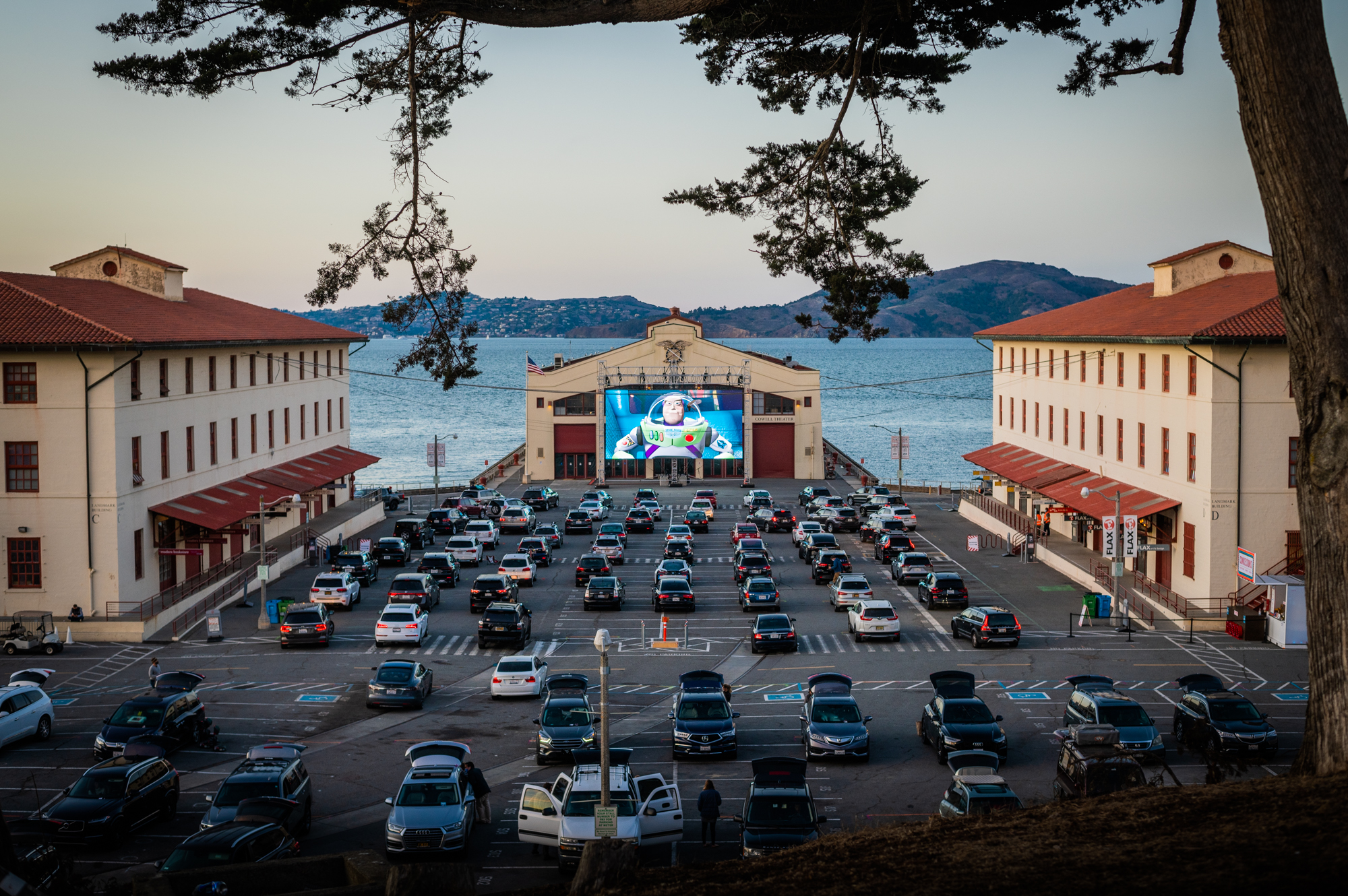
Fort Mason FLIX – San Francisco’s first drive-in movie theater transformed the parking lot into a safe gathering space during the pandemic era. FLIX attracted more than 100,000 guests during its run through June 2021. Screening hundreds of films, the innovative drive-in pop-up provided opportunities for dozens of nonprofits and businesses, including the Roxie Theater, CAAMFest, SFFilm, San Francisco Symphony Orchestra, and Sundance Film Festival, to convene their communities and keep cultural programming alive.

The Interval, Equator Coffee and Radhaus – Day-to-day life on campus is transformed with the addition of a bar, cafe and second full-service restaurant.
FMCAC Recognized as National Leader in Historic Preservation – Following a $20 million rehabilitation of Pier 2, FMCAC received the California Preservation Foundation Design Award. Subsequently, the National Trust for Historic Preservation awarded FMCAC its Trustees Emeritus Award for Excellence in the Stewardship of Historic Sites. The National Trust honored FMCAC not only for its work preserving the historic San Francisco Port of Embarkation but for the pioneering model it created in adaptively reusing historic military sites.

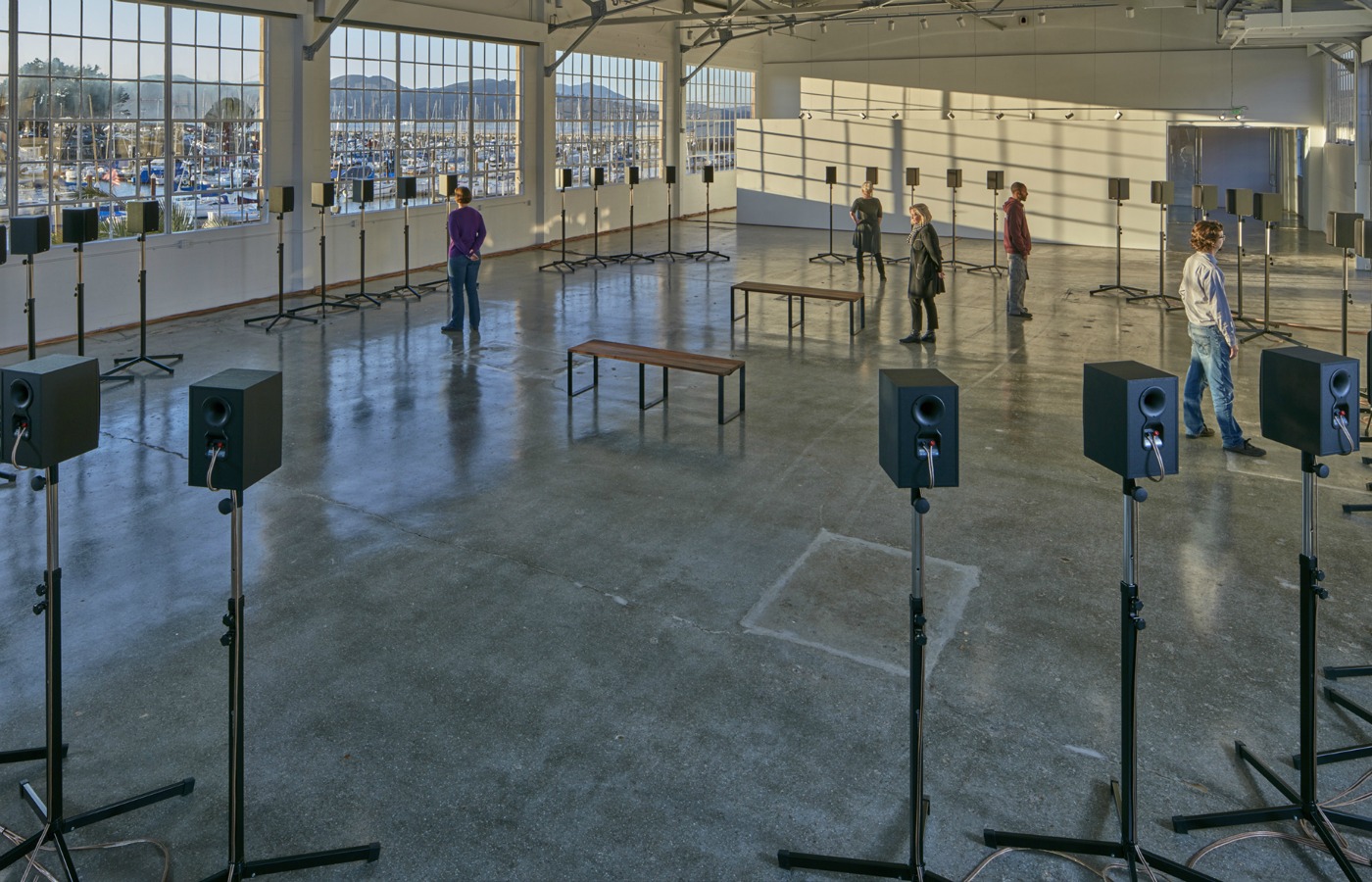
Fort Mason Art – Fort Mason Center rebrands as Fort Mason Center for Arts and Culture and launches its acclaimed Fort Mason Art program with the California Premiere of Janet Cardiff’s acclaimed installation “The Forty Part Motet.”
Flax Art + Design – San Francisco’s oldest art supply store and an icon of creative inspiration relocates its flagship store to campus.
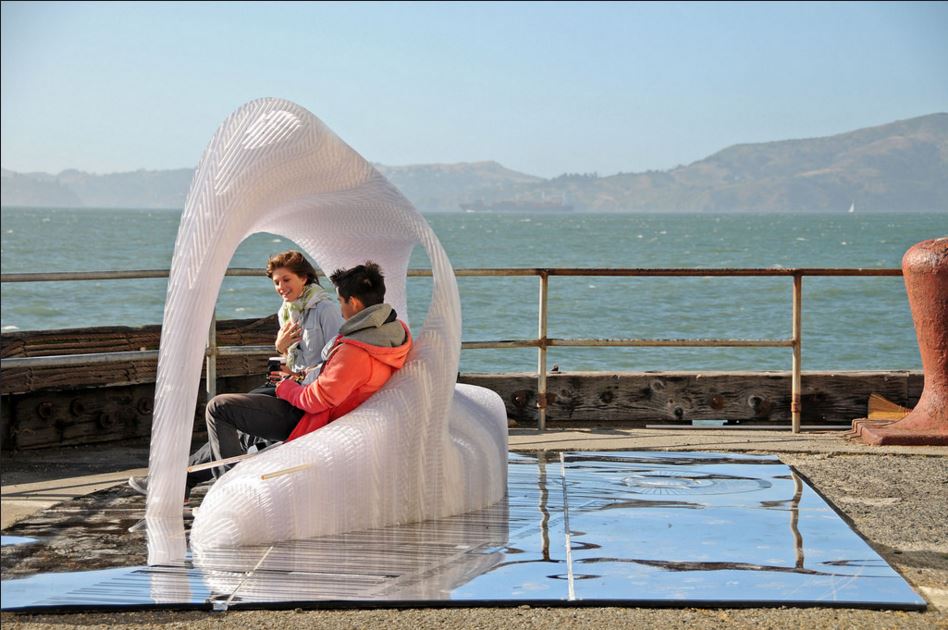
Seat Exhibition – FMCAC commissions artists to create chair inspired art across campus. The installation pulls from the site’s cultural and military history and serves as a proof of concept for what would become Fort Mason Art.
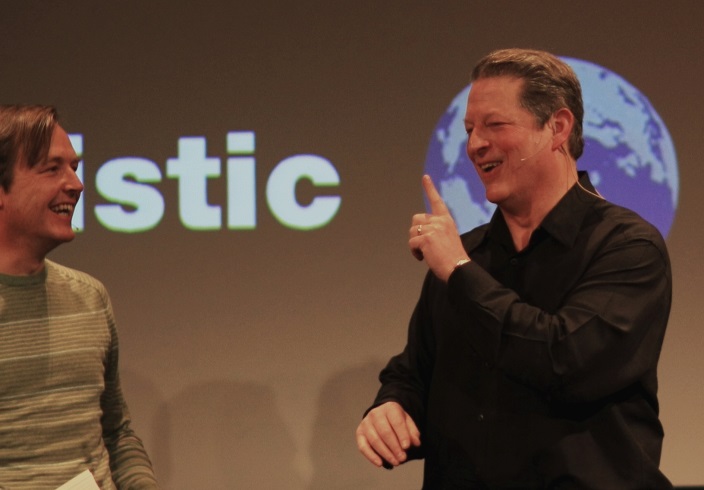
60th Anniversary of the United Nations – In commemoration of the 60th Anniversary of the signing of the United Nations Charter in San Francisco, the United Nations hosted their World Environment day on campus. The weeklong symposium about the future of the planet featured a key-note speech by Al Gore on climate change, the content of which would become the basis for 2006’s Oscar Award-winning film, An Inconvenient Truth.
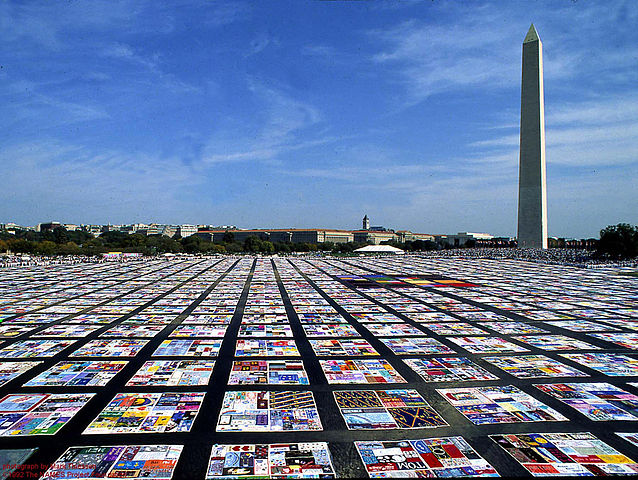
The Aids Memorial Quilt Comes Home – The NAMES Aids Memorial Quilt returns to San Francisco after its exhibition on the National Mall. Comprised of thousands of patches honoring loved ones who died from AIDS, the quilt was created in San Francisco in 1987.
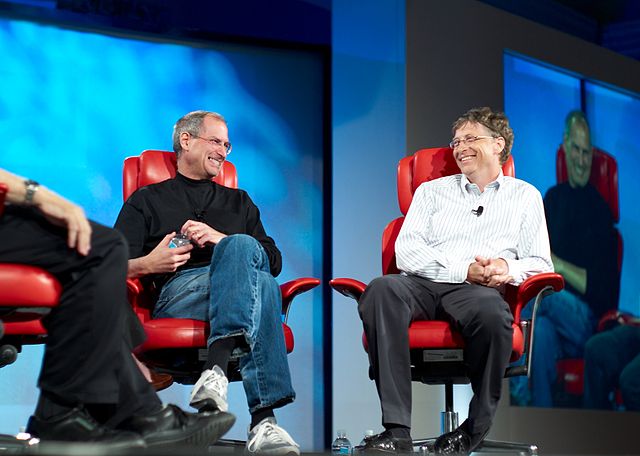
FMCAC becomes a hub for technological innovation – When Steve Jobs needed a forum to unveil what would be become the MAC OS operating system, he choose the Festival Pavilion. When Bill Gates debuted Microsoft Office 98, he likewise chose the Festival Pavilion. Since then FMCAC has continued to host conferences and product launches for tech powerhouses including Google, Facebook, and more.
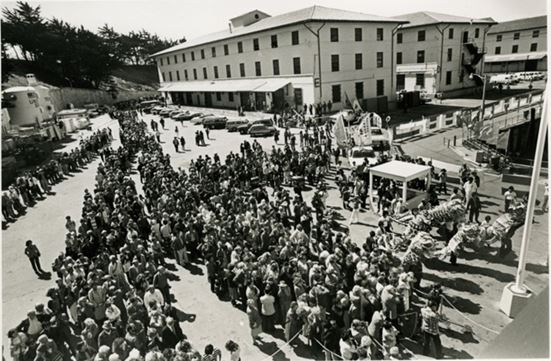
FMCAC Goes Global – In 1980, FMCAC became known on a globally when the People’s Republic of China hosted its first ever trade show in the Festival Pavilion. Tens of thousands of people attended the exhibition which was the largest display of Chinese products ever sent abroad and opened the door for increased trade between China and the United States.
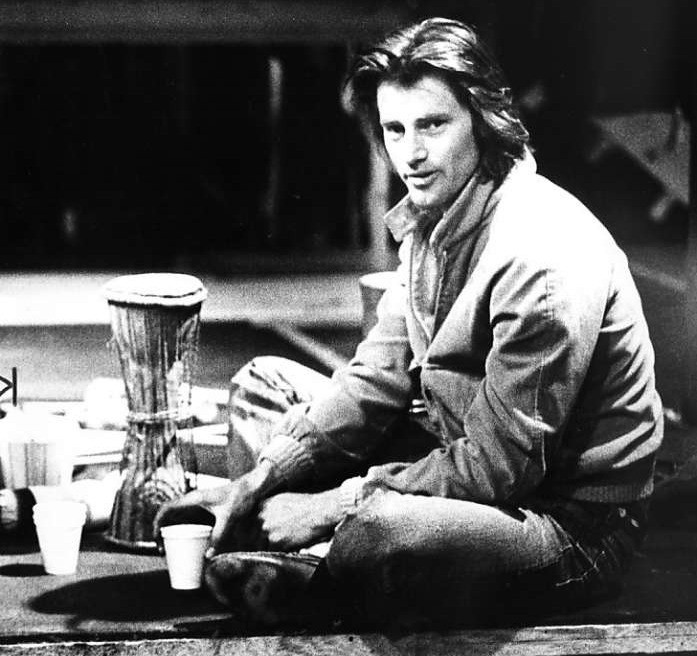
Magic Theatre wins the Pulitzer Prize – 1978 saw the debut of Magic Theatre’s resident playwright and actor Sam Shepherd’s “Buried Child.” The play would go on to win the Pulitzer Prize for Best Drama in 1979 and span more than 400 productions around the world.
Greens Restaurant Launches Vegetarian Dining – In 1979, Greens Restaurant opens on campus and, as the New York Times proclaims, “established vegetarian food as a cuisine in America.”
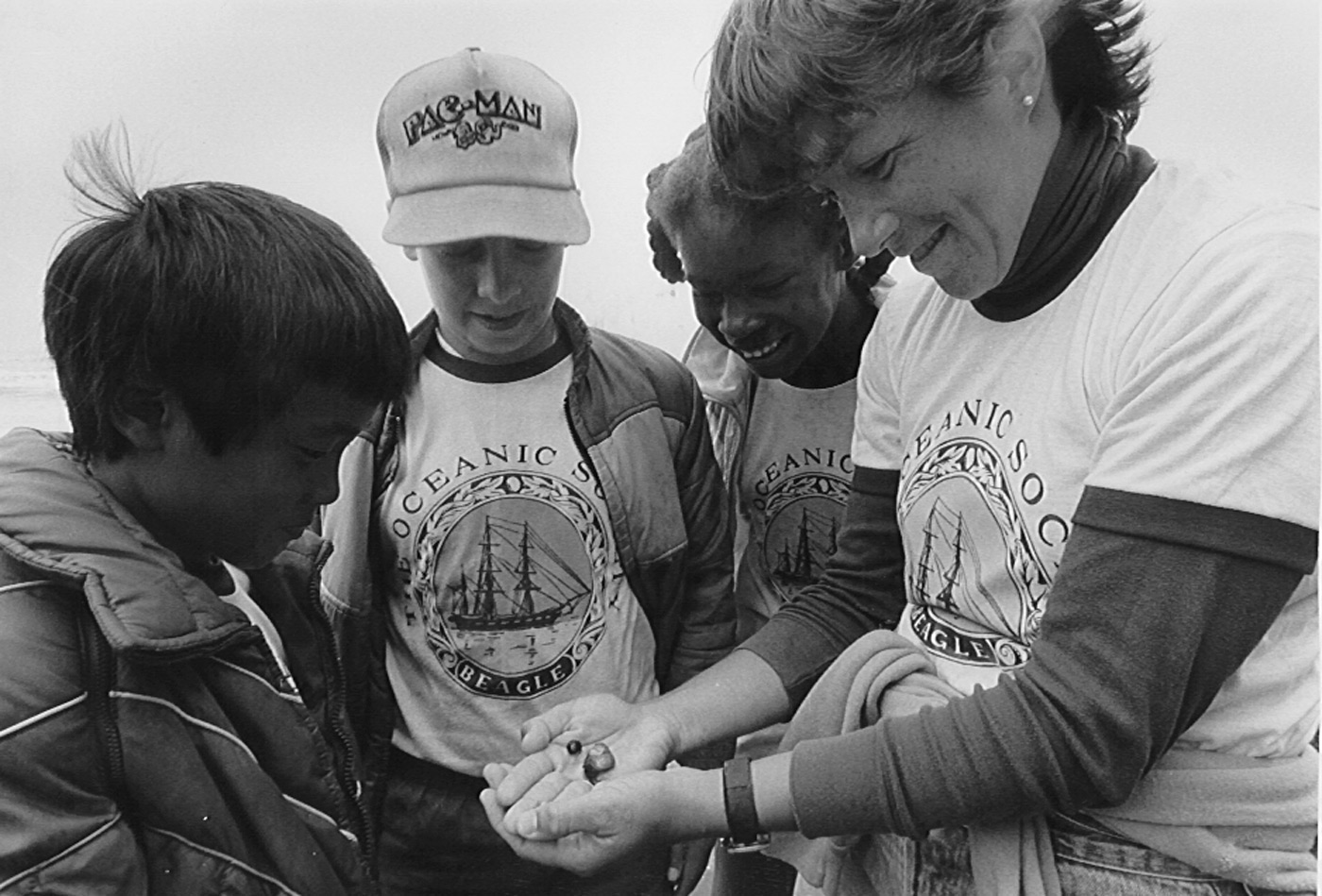
A Place to Preserve the Diverse Culture of the Bay Area. With the National Park Service unable to steward Lower Fort Mason itself, it sought a partner that would be a “pioneer in the imaginative use of urban national parklands and to reflect and preserve the diverse culture of the Bay Area. A group answered the call to do this, forming the Fort Mason Foundation (now Fort Mason Center for Arts & Culture). The group immediately began repairing the dilapidated campus and after many months of hard work, the campus opened to the public on January 1, 1977. Shortly, thereafter the first cohort of non-profit residents began moving in.
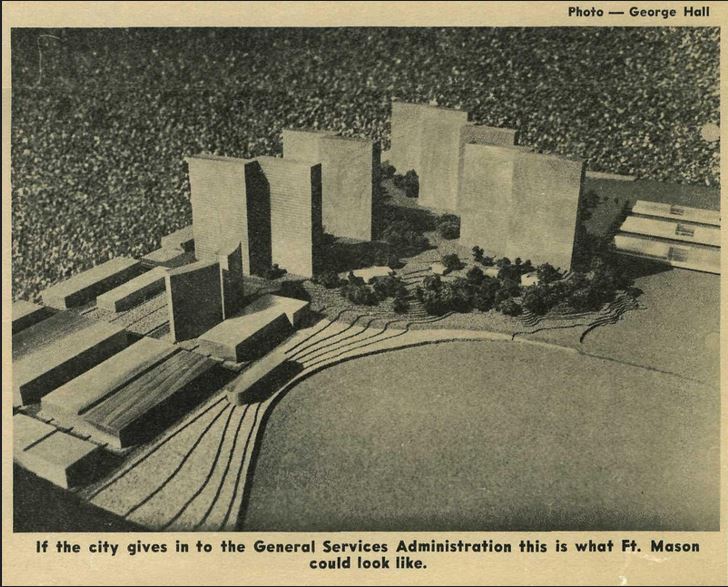
Creation of the Golden Gate National Recreation Area – After a decade of sitting in disrepair, the tides were turning for Fort Mason and other abandoned parcels of government-owned land. After a group of American Indians took control of Alcatraz in 1969, public gaze fixated on these unused public lands. In 1972 fighting off alternative proposals for development, Representative Philip Burton introduced and passed HR 9498 which established the Golden Gate National Recreation Area, a 78,000 acre National Park that includes Fort Mason.
The End of the Military Era. At the onset of the Korean War (1950-1053), Fort Mason reprised its role as a military shipping depot. By the war’s end, the Army replaced Fort Mason with larger ports including the Port of Oakland. In 1962, after 165 years of continuous military service by the American and Mexican armed forces, the U.S. Army left Fort Mason.
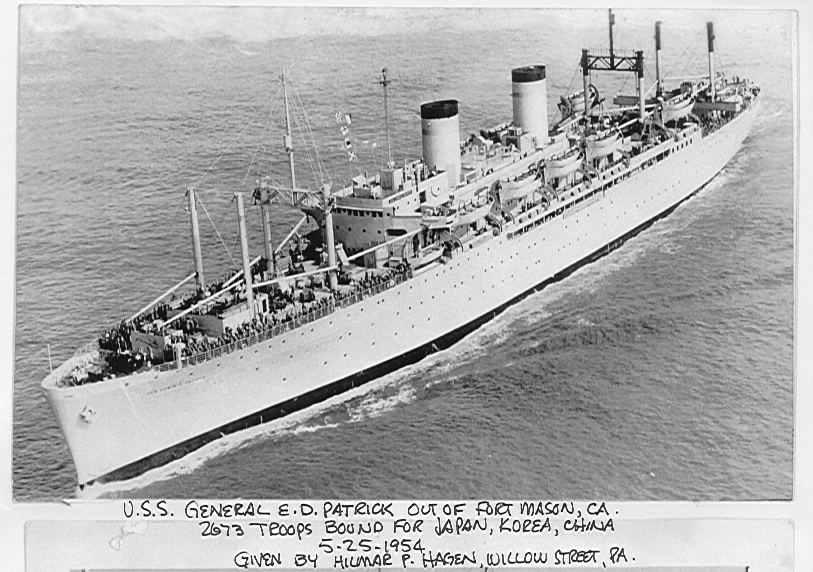
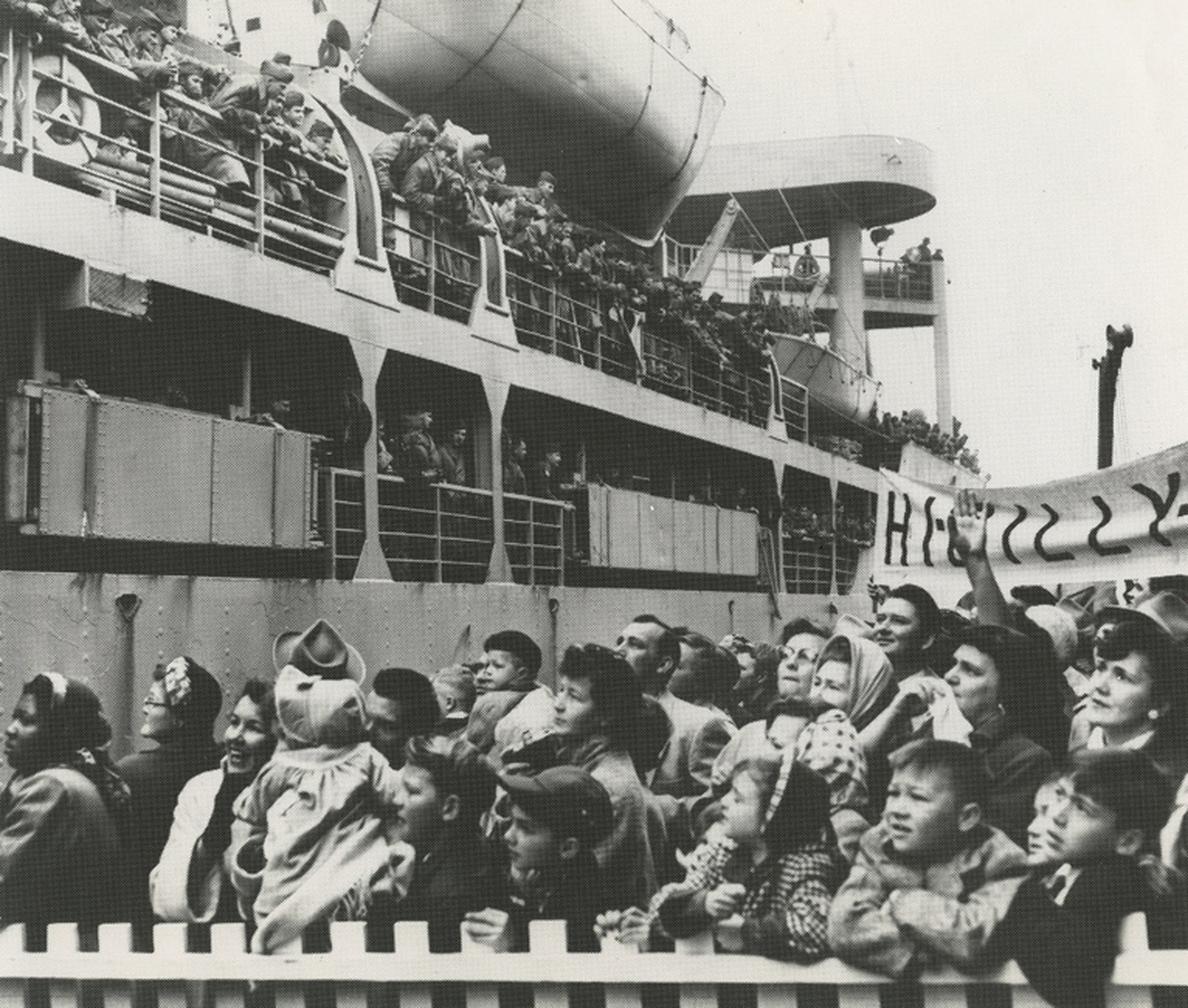
World War II – After the bombing of Pearl Harbor on December 7, 1941, the first supply convoy to rebuild the Hawaiian military outpost shipped from Fort Mason’s three piers. During the war, over 2.5 million soldiers shipped out for the Pacific Theater from Fort Mason. Fort Mason served as the last place they touched U.S. soil before the war and the first place they touched it upon their return home. Fallen soldiers remains were also repatriated at Fort Mason before being returned to their families.
Construction of Campus. With the world at war and the need to send soldiers and supplies across the Pacific, the U.S. Army built what would become the San Francisco Port of Embarkation. Centered around three large piers on the San Francisco Bay, the San Francisco Port of Embarkation was the primary shipping depot for the U.S. military on the west coast.
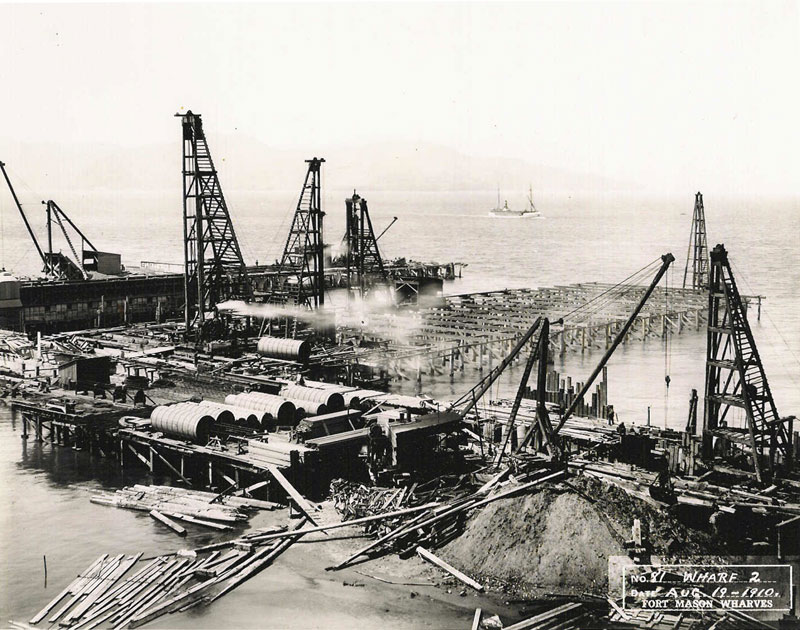
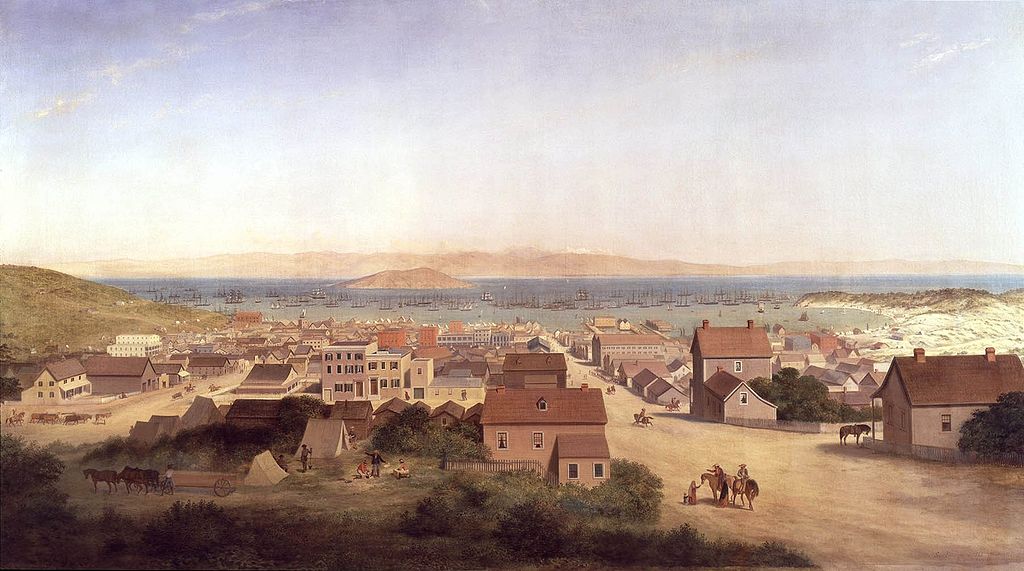
Batteria de Yerba Buena – The Mexican Army saw the same advantages of Black Point as the Ohlone people and in 1797 established the first fort on the site. As U.S. expansion moved westward, and the gold rush enveloped California, the U.S. military took ownership of the site making it an official military outpost in 1850, the year California became a state.
Ohlone Land. The Ohlone were the original dwellers of the inhabitants of Black Point, the peninsula adjacent to FMCAC’s campus. The sandy shoreline likely provided a natural launching spot for the Ohlone.

Sign up today for the latest news from Fort Mason Center For Arts & Culture.